Instant payday loan in India: eligibility, interest rates and repayment

An instant payday loan is a small loan that gets you to your next salary. You apply on your phone, a lender looks at your profile, and if it says yes, the money can be in your account the same day.
That's the good part. The other part is that it costs more than it looks. So take only what next month's salary can pay back without pain.
What exactly is a payday loan?
It's a short, unsecured loan. Unsecured means you don't pledge anything, no gold, no property. You usually repay it in one go from your next salary. Some people call it a salary advance.
How it works on Loanwalle
So the flow looks like this:
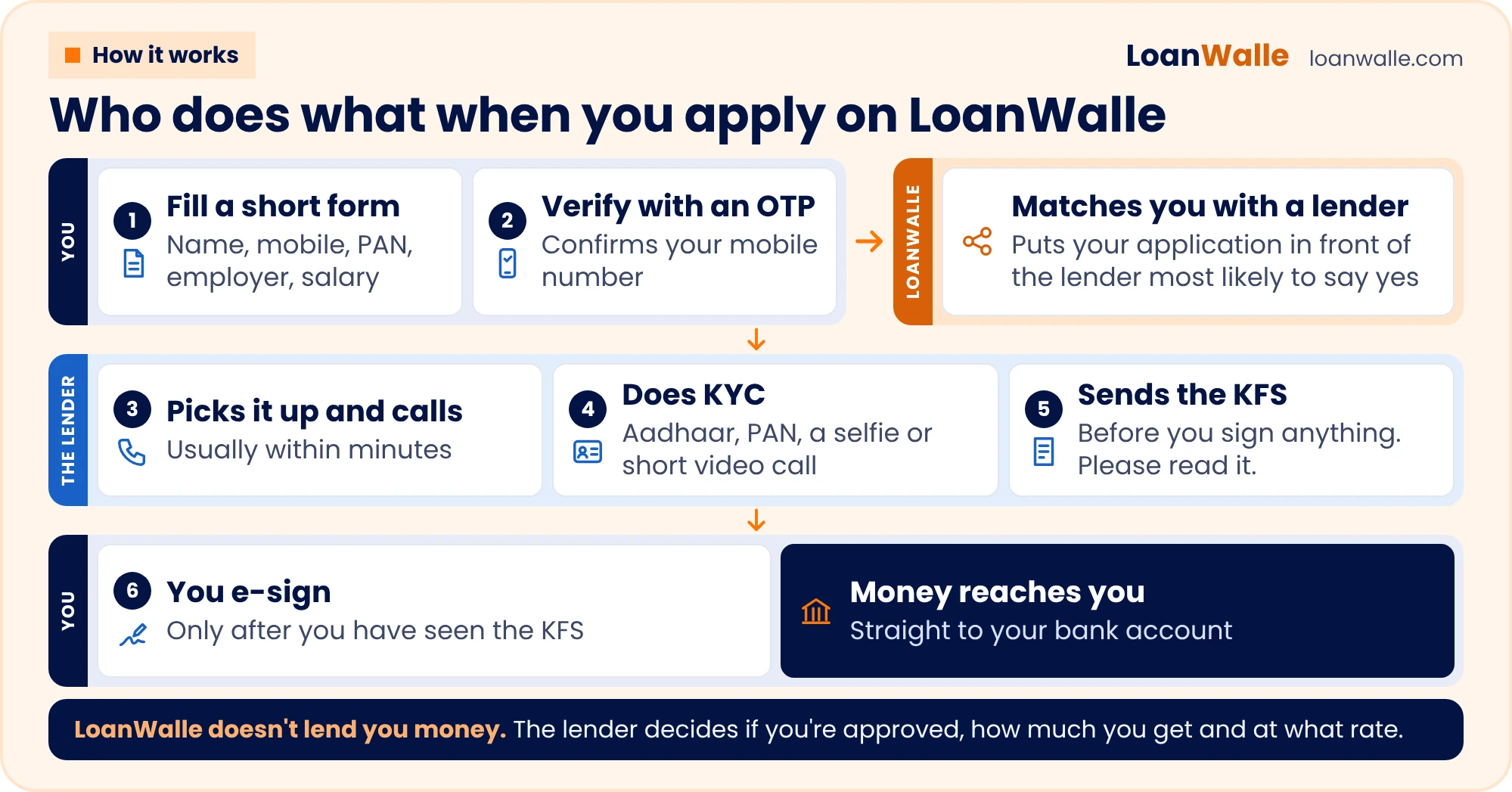
You fill a short instant loan form. Name, mobile, PAN, employer, salary.
You verify your number with an OTP. [A lot of people stop right here and never come back. Takes 20 seconds. Finish it.]
A lender that fits your profile picks it up and calls you, usually within minutes.
The lender does KYC. Aadhaar, PAN, a selfie or short video call.
The lender sends you a Key Fact Statement (KFS) before you sign anything.
You e-sign. Money goes straight to your bank account.
And to be clear, the lender decides if you're approved, how much you get and at what rate. Not us.
Should you even take a payday loan?
Odd question for a loan platform to ask, maybe. But it matters more than anything else on this page.
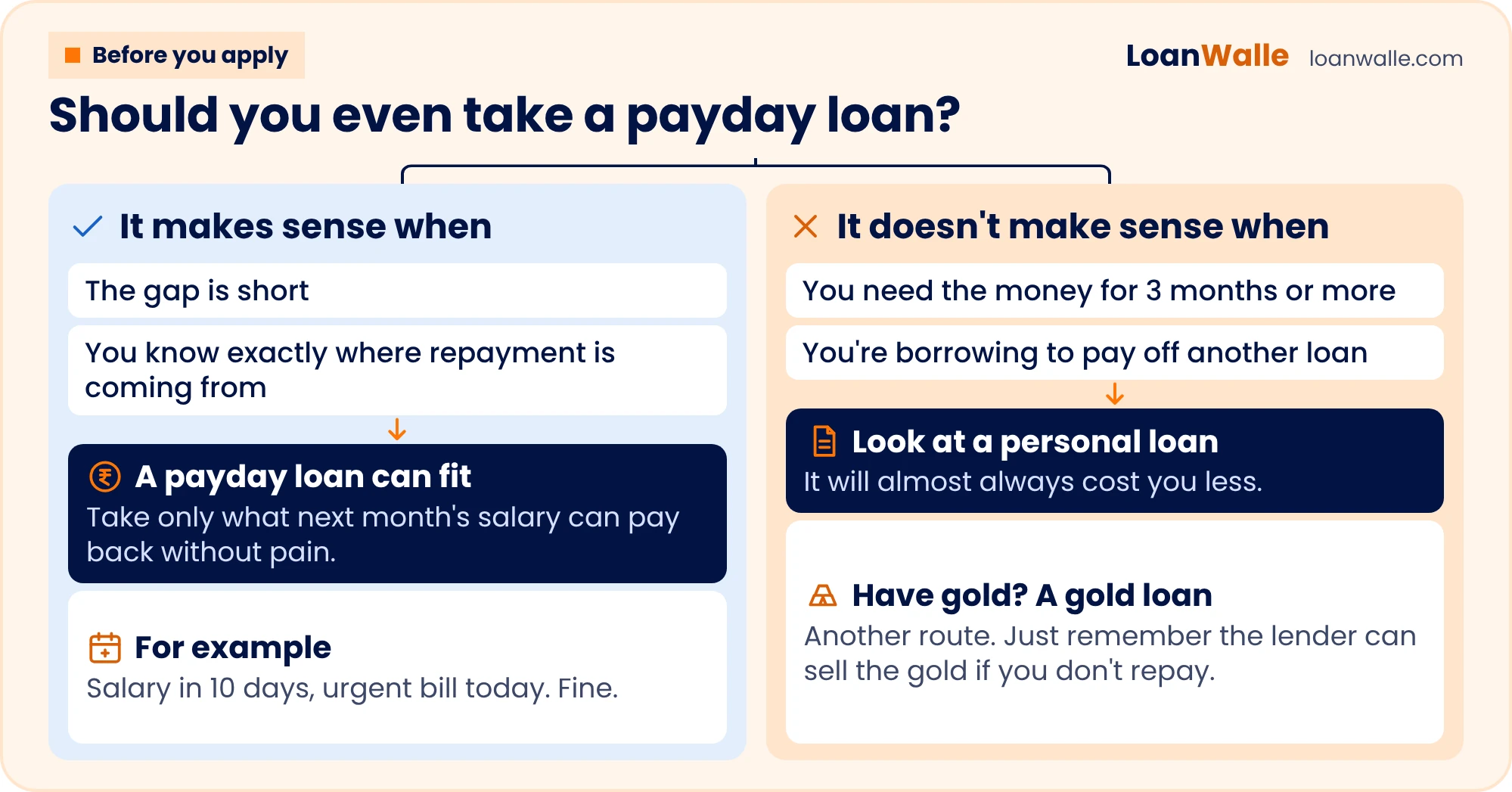
A payday loan makes sense when the gap is short and you know exactly where repayment is coming from. Salary in 10 days, urgent bill today. Fine.
It doesn't make sense if you need the money for 3 months or more. Or if you're borrowing to pay off another loan. In both cases, a personal loan will almost always cost you less. If you have gold, a gold loan is another route, just remember the lender can sell the gold if you don't repay.
Quick comparison:
| Payday loan | Personal loan | Credit card cash | |
|---|---|---|---|
| Amount | A few thousand to ~1 month's salary | ₹50,000 to several lakhs | Your card's cash limit |
| Tenure | Days to a few months | 1 to 5 years | Till the card bill |
| Speed | Minutes to same day | Same day to a few days | Instant at an ATM |
| Cost | Higher, fees add up fast | Lower if your profile is good | High. Interest from day one plus a withdrawal fee |
| Use it for | A short, urgent gap | Bigger, planned expenses | Very small, very short emergencies |
Payday loan eligibility: who gets approved?
Every lender has its own rules. Most will want:
Keep your last [3] months of bank statements or salary slips handy. Some lenders also ask for your work email.
Interest rates and charges: what it really costs
The interest rate is the number everyone looks at. It's also the least useful one.
On top of interest you'll usually pay a processing fee (often cut from the loan before it reaches you), 18% GST on that fee, late charges if you miss a date, and sometimes a charge for closing early. All of it has to be in the KFS.
APR vs interest rate, with a real example
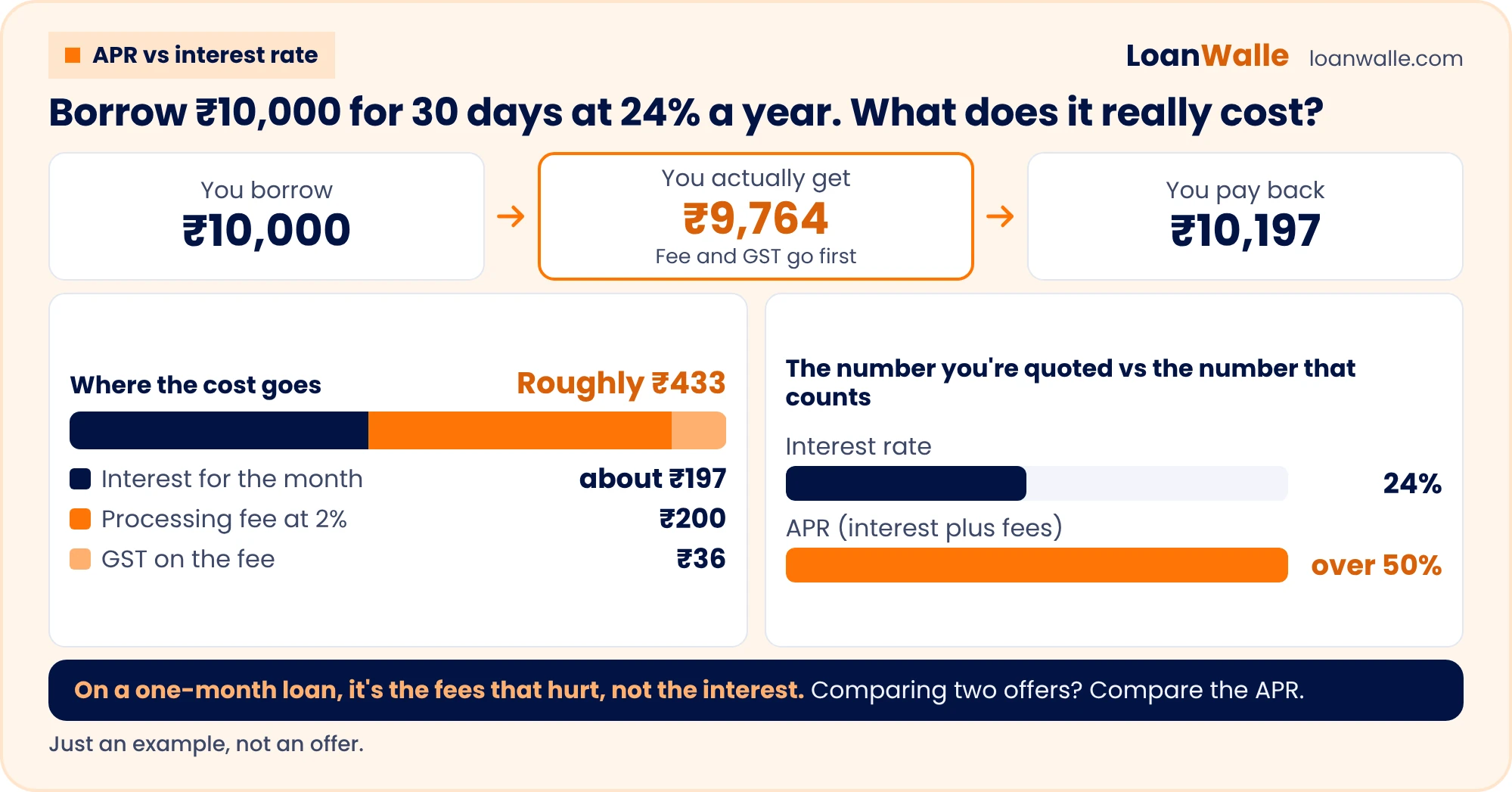
APR (Annual Percentage Rate) is the full yearly cost, interest plus fees, in one number. Lenders have to show it in the KFS. If you're comparing two offers, compare the APR. Nothing else.
Say you borrow ₹10,000 for 30 days at 24% a year. (Just an example, not an offer.)
So roughly ₹433 to borrow about ₹9,764 for a month. Annualise that and the APR is over 50%. Double the "24%" you were quoted.
Your rights under RBI's digital lending rules
RBI's Digital Lending Directions, 2025 apply to every loan you take through our partners. What that means for you:
KFS before you sign.
APR, all charges, repayment dates, the lender's name and how they'll collect.
Money goes straight to your account.
Never through someone else's account.
At least one day to change your mind.
Return the principal plus the cost for the days you had it, no penalty. The lender may keep a one-time processing fee if the KFS says so.
You always know who your lender is.
Repaying it (and not getting stuck)
Most payday loans are repaid in one go, on a date close to your salary day. Longer ones may be split into a few instalments.
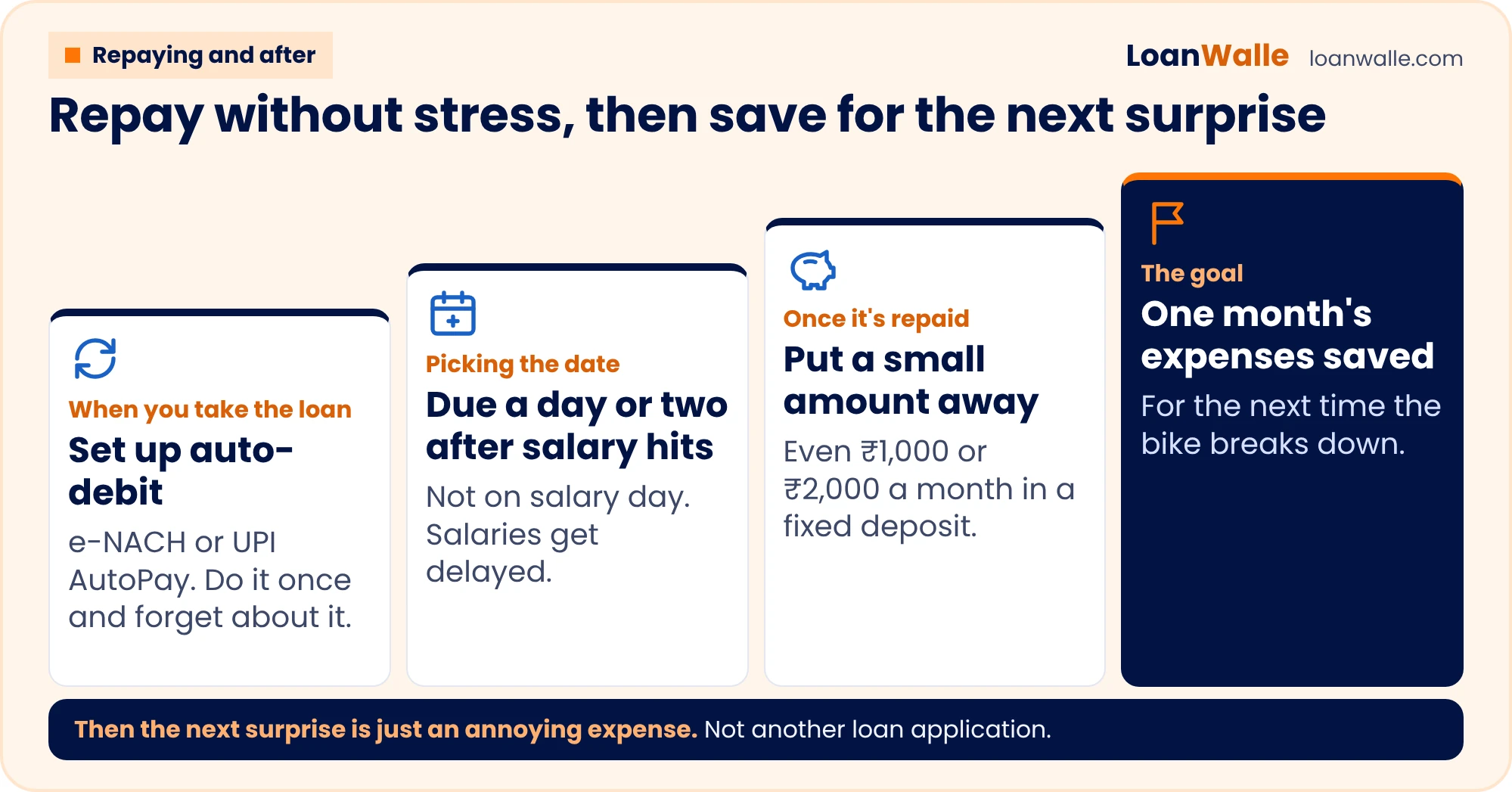
Set up auto-debit (e-NACH or UPI AutoPay) when you take the loan. Do it once, forget about it, no late fee because you had a busy week. UPI, net banking and debit card through the lender's app all work too. Paying early usually saves interest, but check the KFS for any prepayment charge.
A few things we'd tell a friend:
Once it's repaid
This bit matters to us more than the loan itself, if we're honest.
A payday loan fixes this month. It does nothing for the next time the bike breaks down. So once you've repaid, try putting a small amount away every month, even ₹1,000 or ₹2,000 in a fixed deposit, until you have one month's expenses saved.
Then the next surprise is just an annoying expense. Not another loan application.